Claude SEO: Training Data, Retrieval, and What a Brand Can Change
Sep 7, 2026 · 10 min read
What Claude holds about your company from training, what it fetches from the live web, and why corrections reach those two routes on different clocks. Written for the brand lead who watched an assistant describe their company as something it stopped being two years ago.
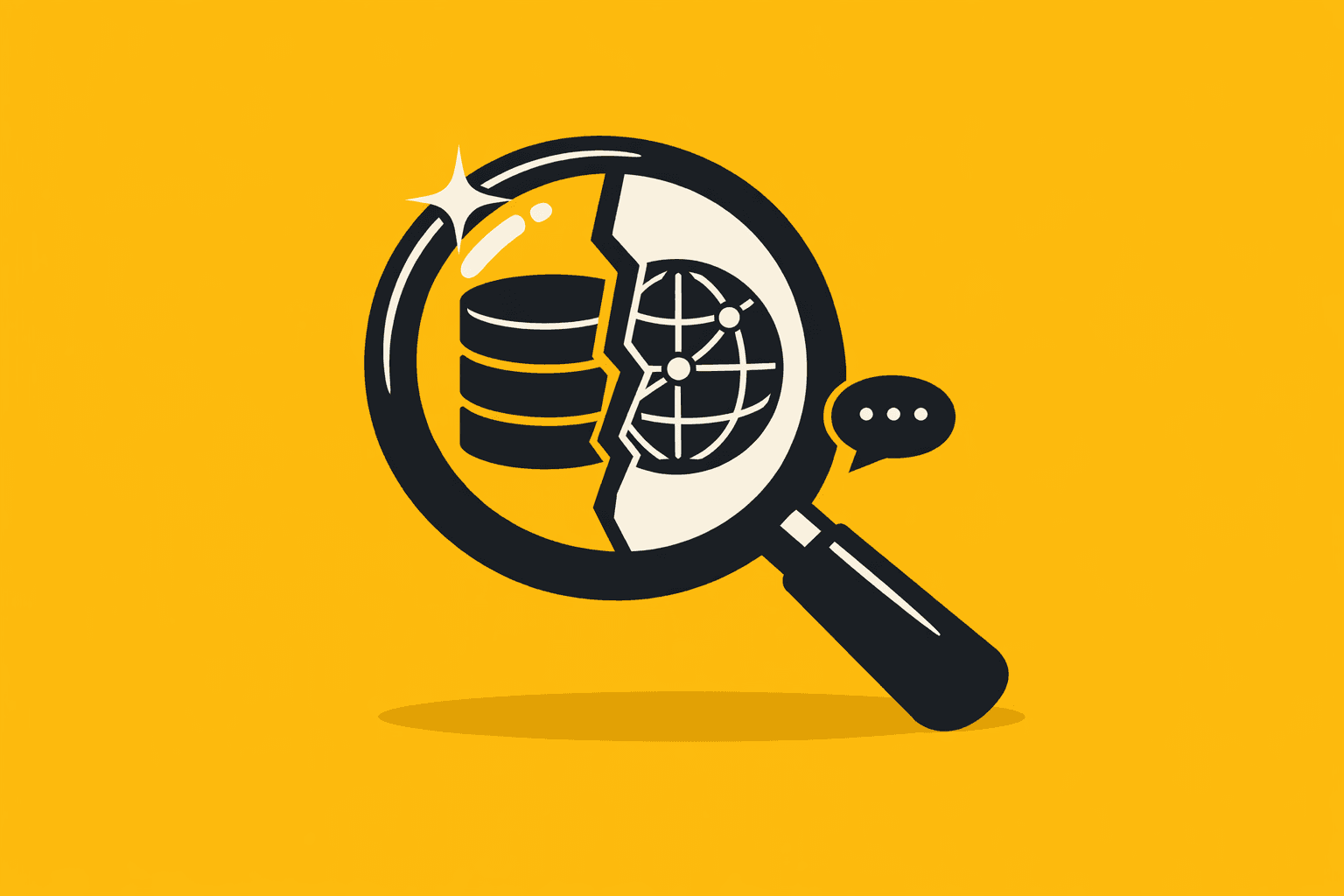
Claude SEO is the work of getting one company description right across two supply routes. Claude can answer from what it absorbed in training or search the live web before replying. Anthropic documents both paths. They fail differently, and corrections reach them on different clocks.
Anthropic publishes a knowledge cutoff for every model it ships. Claude Opus 5 was trained on data up until May 2026, while Claude Haiku 4.5 stops at July 2025.
That is a ten-month spread inside one product family.
The Transparency Hub splits the number in two for earlier models. Claude Opus 4 carries a training data cutoff of March 2025. Its reliable knowledge cutoff is January 2025, two months earlier.
Recall thins out before the cutoff arrives. The company saying so is the company that trained the model.
Key Takeaways
- Two routes, two clocks: Claude can rely on training recall or add information from a live search. A correction reaches those two routes months apart.
- Training recall moves at release cadence: nothing you publish today can change it unless a future model trains on newer material. Anthropic publishes the cutoff dates, so you can date the gap yourself.
- The fastest available Claude SEO fix is usually a deletion. Anthropic runs three separately blockable robots. A robots.txt line written to protect training data can also switch off live retrieval.
- Retrieval reads other people’s pages: the sentence Claude uses about your category position may come from a source you do not control.
- Web-search citations are always on: Anthropic states that web search responses carry citations. A brand can see which pages one answer cites.
Where Claude's Answers Come From
Claude answers a question about your company through two supply routes. It can rely on the statistical associations formed during training or add information from a live search before replying.
Most of what circulates as Claude AI SEO advice treats the model as one box with one input. That framing hides the only distinction that changes what a marketing team does next.
The Two Documented Surfaces
The developer surface is the web search tool. A developer adds it to an API request. Anthropic's documentation covers when Claude decides to search, what a result contains, and how citations come back.
The consumer surface is the web search toggle inside claude.ai. The help center article on enabling web search describes it and was checked on 7 September 2026.
These are two different products and this article keeps them apart. The API documentation describes a tool a developer switches on. The help center describes web search inside the chat interface, plus a web fetch behavior that reads a URL you paste.
Where the two agree, the claim is safe. Both state that responses carry citations to the sources used. Where only one documents something, this article says which. Our walkthrough one engine, end to end, covers the equivalent split on ChatGPT.
Training Knowledge vs Live Retrieval
Treat these as two correction timelines. One can change when the live sources are updated and retrieved again. The other changes only across model generations. Everything a brand can act on follows from which clock a wrong sentence is running on.
| Training recall | Live retrieval | |
|---|---|---|
| What it reads | Material included in training before the model’s cutoff | Web sources found or fetched when you ask |
| What moves it | What the model’s training data contained before that date | What is crawlable and published now |
| Earliest possible repair | A future model generation | After the corrected source becomes retrievable |
| What you can observe | No evidence of a live web search | Citations and source links in the answer |
| What you can influence | Nothing directly once training is complete | The current pages and access rules |
What a Training Cutoff Actually Means
A cutoff is not one date across the product. Anthropic's models overview publishes a separate reliable knowledge cutoff per model. The range across current models runs from February 2025 to June 2026.
A user on one model gets a different vintage of your company than a user on another. Neither user picked the vintage. The person on the older model may be reading a description assembled before your last two announcements.
When Claude Searches
Anthropic's web search documentation lists what triggers a search. One of the four named categories is "information about specific organizations, people, or products that might have changed."
That category includes questions about your company when the answer may have changed. Those brand questions sit inside the documented search-trigger list. It is the most useful line in the documentation for a marketing team. The same page notes that a system prompt can influence whether Claude searches, so treat the behavior as a default rather than a guarantee.
How to Tell Which One You Got
Look for citations. Anthropic states that citations are always enabled for web search. The consumer help article says every search response includes them.
An answer with source links used live web material. An answer with none gives you no evidence that Claude searched the web. That test takes five seconds. It tells you whether the cited sources provide an immediate place to start.
Why the Split Matters for Brand Accuracy
The objection lands here and deserves a straight answer. If a wrong description is baked into training, nothing changes this quarter, so why keep reading?
Because many description errors can still be retrieval-path errors. A model searching live about a renamed company reads the pages its search retrieves now. Suppose the old name still dominates the directories and the review sites. The retrieval path repeats it, and the citations make it look verified.
Renames are the clean test case. Scrunch AI now operates as Scrunch at scrunch.com. Sitecore announced its acquisition of Scrunch on June 3, 2026, and both facts were checked in September 2026.
The old domain redirects to the new one while the app still runs on the old hostname. A model reading those pages live has several plausible sentences available, and only some are current.
Naming the problem is where this article stops. The detection thresholds, the triage sequence, and the work of correcting the source rather than the answer have their own home on this blog.
What Anthropic Documents
This is where the argument becomes testable. Every behavioral claim above traces to a page Anthropic publishes. The honest list of what it does not publish is short.
| Claim | Status |
|---|---|
| Each model has a published knowledge cutoff date | Documented |
| Which request types trigger a live search | Documented |
| That web search responses carry citations | Documented |
| Three named robots, and what blocking each one does | Documented |
| Domain filtering and localization in the API tool | Documented |
| Whether claude.ai behaves identically to the API tool | Partially documented |
| Which retrieved source Claude prefers when two disagree | Not documented |
| How training weights one description of a brand over another | Not documented |
| Whether a mention on one domain counts more than another | Not documented |
| How long after publication a page becomes retrievable | Not documented |
What Is Not, and Why That Matters
Four rows say Not documented. They are the four rows most Claude SEO advice is built on. Ranking, weighting, scoring, and preference inside the model are unpublished. Anyone writing confidently about them is writing about something they cannot check.
We are not filling those rows with plausible guesses. A short sourced list beats a long speculative one. The rows marked Documented are enough to act on.
The Off-Site Signals That Carry
Asked how to rank in Claude, most answers hand back an on-site checklist. A narrower question is more useful. Which third-party surfaces state what your company is, in a sentence a model can lift whole?
Retrieval reads other people's pages about you. That is the thesis behind where models actually learn about you. Claude’s documented supply routes show that principle at work.
The Three Robots You Can Block by Accident
Anthropic runs three robots and documents each one separately, along with what happens when a site owner blocks it.
- ClaudeBot collects web content that could contribute to model training. Restricting it signals that future materials should be excluded from training datasets.
- Claude-User may fetch pages when a user’s question sends Claude to a site. Anthropic states that disabling it prevents retrieval of your content in response to a user query.
- Claude-SearchBot indexes content to improve search result quality. Disabling it may reduce your visibility and accuracy in user search results.
Go and read your own robots.txt this week. A blanket AI block written in 2024 may have kept a site’s pages out of training data. It may also be switching off a route that can carry a correction. That is the line worth deleting, and the fix takes less than a minute.
The Surfaces That State What You Are
Category directories, review platforms, encyclopedic references, and analyst write-ups each publish a declarative sentence about what your company does. Those sentences are the raw material a model lifts. Your homepage headline usually is not. It is written as positioning rather than as a definition.
Keeping those sources agreeing with each other is the work covered under how well a model understands your brand. The broader question of how models choose what to cite sits alongside it. For the machine-readable option, the markdown index for AI crawlers covers what the specification proposes and what it cannot do.
How to Check How Claude Describes You
Ask Claude to describe your company, then record what came back and under which conditions. Tracking brand mentions in Claude starts with one prompt and a spreadsheet, and it needs no product to begin.
Writing the Description Prompt
Ask for the description, not for a ranking. "What does [company] do, and who is it for?" produces the sentence you need to audit. A prompt about the best vendors produces a different artifact.
Run a category version too. A wrong category label is one of the most expensive errors. It removes you from consideration sets you belong in.
Logging the Conditions
The same prompt returns different answers under different conditions. Log the conditions or the record is worthless for comparison.
| Field | What to record |
|---|---|
| Model | The exact model name shown in the interface |
| Web search | On or off |
| Citations | Every source URL returned, or "none" |
| Date | The day of the run |
| Verdict | Correct, partially correct, or wrong, plus the specific error |
Claude is one of five engines answering these questions independently. A clean Claude result tells you nothing about the other four. Our guide to building a prompt set worth tracking covers how to turn a handful of prompts into something repeatable.
What to Do With a Wrong Answer
Read the citations first. A wrong answer with citations names the sources you can investigate first. The sources it cites are listed in the response. A wrong answer without citations gives you no source-level fix, so it belongs on a longer diagnostic timeline.
Then fix the source rather than the answer. There is no field to edit inside the model, and no routine support request directly rewrites a company description.
How Klarivo Tracks Claude Alongside the Other Engines
If the retrieval path reads third-party pages, the useful question is not what your own site says. It is which domains an engine drew on when it described you, and whether those domains still say the same thing this month.
Klarivo Monitor tracks Claude alongside ChatGPT, Perplexity, Gemini, and Grok, each provider tracked independently and refreshed on a schedule the client controls. The relevant report here is Top 10 Citation Sources, which lists domains by provider. That reporting is domain-level by design, because domain-level is what the data supports.
Measurement and correction are different jobs. Finding the wrong description is relatively easy. Changing the pages Claude reads next means working on sources you do not own. Klarivo Monitor reports the domains, while Reddit Acceleration Services builds the community presence needed to appear on them.
Find out which domains an engine reads when it describes your company. Book a 15-minute Klarivo discovery call at a time that works for you. Your booking is confirmed immediately.
Frequently Asked Questions About Claude SEO
If I block ClaudeBot today, does my company disappear from Claude's existing answers?
No. Anthropic's crawler documentation describes the block as a signal that a site's future materials should be excluded from training datasets. Training that already happened is not reversed by a robots.txt edit. The change affects what a later model may learn, not what a current model already holds.
Is optimizing for Claude different from optimizing for ChatGPT?
The underlying work overlaps and the diagnostics do not. Both engines draw on trained recall and live retrieval, so the off-site sources describing your category serve both. What differs is what each provider publishes about itself, which changes what you can verify rather than what you do.
Do I need a paid tool to check how Claude describes my company?
No. Four things get you a usable baseline:
- A free Claude account, with web search toggled on, then off.
- One description prompt and one category prompt, worded the same way every run.
- A spreadsheet carrying model, date, search state, and citations.
- A monthly cadence, because a single run is an anecdote.
A tool earns its place when you need many prompts across five engines on a schedule.
Can I get a wrong statement about my company removed from Claude?
Not directly, and the limits are worth stating. There is no editable record, and no correction form reaches the model. What you can change is the public evidence, so the next retrieval reads something better.
Anthropic does publish routes for reporting content, but those are designed for policy, legal, privacy, and content-removal issues. An outdated category label is not that, and it may take a model generation to clear.
Which pages should I check first if my robots.txt blocks AI crawlers?
Start with the four carrying declarative sentences about you:
- Your About or company page, which states what you are.
- Your pricing or product pages, which state what you sell.
- Any documentation subdomain, which often has its own robots file.
- Your blog subdirectory, if it sits behind separate rules.
Subdomains need their own robots.txt entries. That is where most accidental blocks survive a cleanup.
Start accelerating your Reddit presence
See how Klarivo can shift your visibility across AI, search and buyer communities.
Book a Demo